Beyond the Placard: The New Era of Interactive Storytelling
Static text on a wall can only say so much. Modern interactive storytelling uses location-based audio, detective-style exploration, and non-linear narratives to turn visitors into active participants.
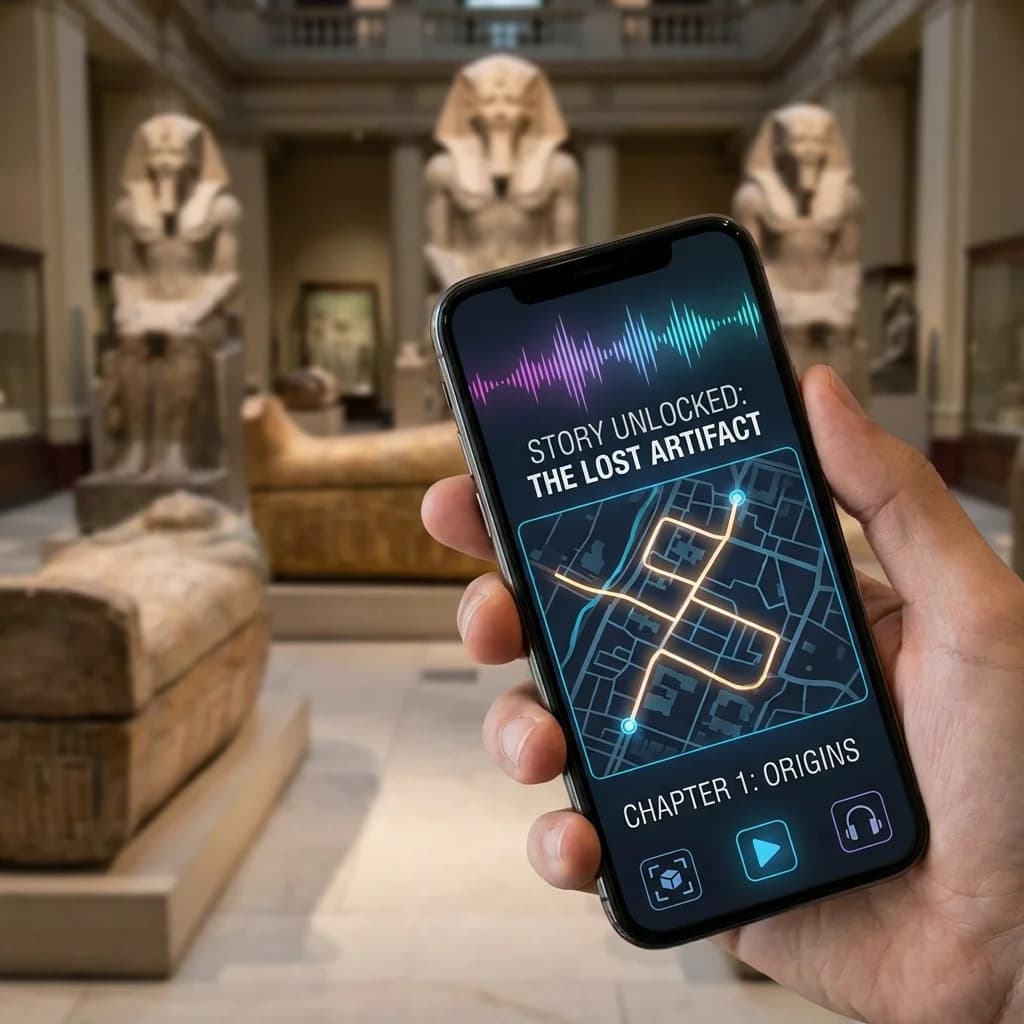
The traditional museum caption is 150 words of facts. It tells you *what* an object is, *when* it was made, and *who* made it. But it rarely tells you how it *felt* to hold it.
Interactive storytelling is shifting the focus from information transfer to emotional connection. By using digital tools, we can layer multiple narratives onto a single space.
Audio Spheres and Soundscapes
Imagine walking into a recreated 1920s shop. Instead of silence, you hear the muffled sound of a radio, the clinking of coins, and distant traffic. As you move closer to the counter, a shopkeeper's voice begins to tell you about their day.
Location-based audio (triggered by beacons or UWB) allows museums to create these "audio spheres." Visitors move through sound just as they move through space.
The "Detective" Mode
Gamification doesn't mean turning history into Fortnite. It means giving visitors a goal. Instead of "look at these tools," a digital guide might ask, "Can you find the tool that was repaired by its owner?"
This simple prompt forces the visitor to look closer, to analyze the physical object, and to engage their critical thinking.
Non-Linear Narratives
Not everyone wants the same story. Interactive guides allow for "perspective switching." A single room in a historic house can be toured from the perspective of:
- The wealthy owner (Architecture & Art focus)
- The servants (Social history & Labor focus)
- The children (Play & Daily Life focus)
This empowers the visitor to choose the lens through which they view history, making the experience deeply personal and repeatable.