Hybrid History: How AR is Transforming Heritage Sites Without Screens
The era of holding up an iPad to see history is ending. Discover how next-gen AR glasses and projection mapping are blending the digital and physical worlds without blocking the view.
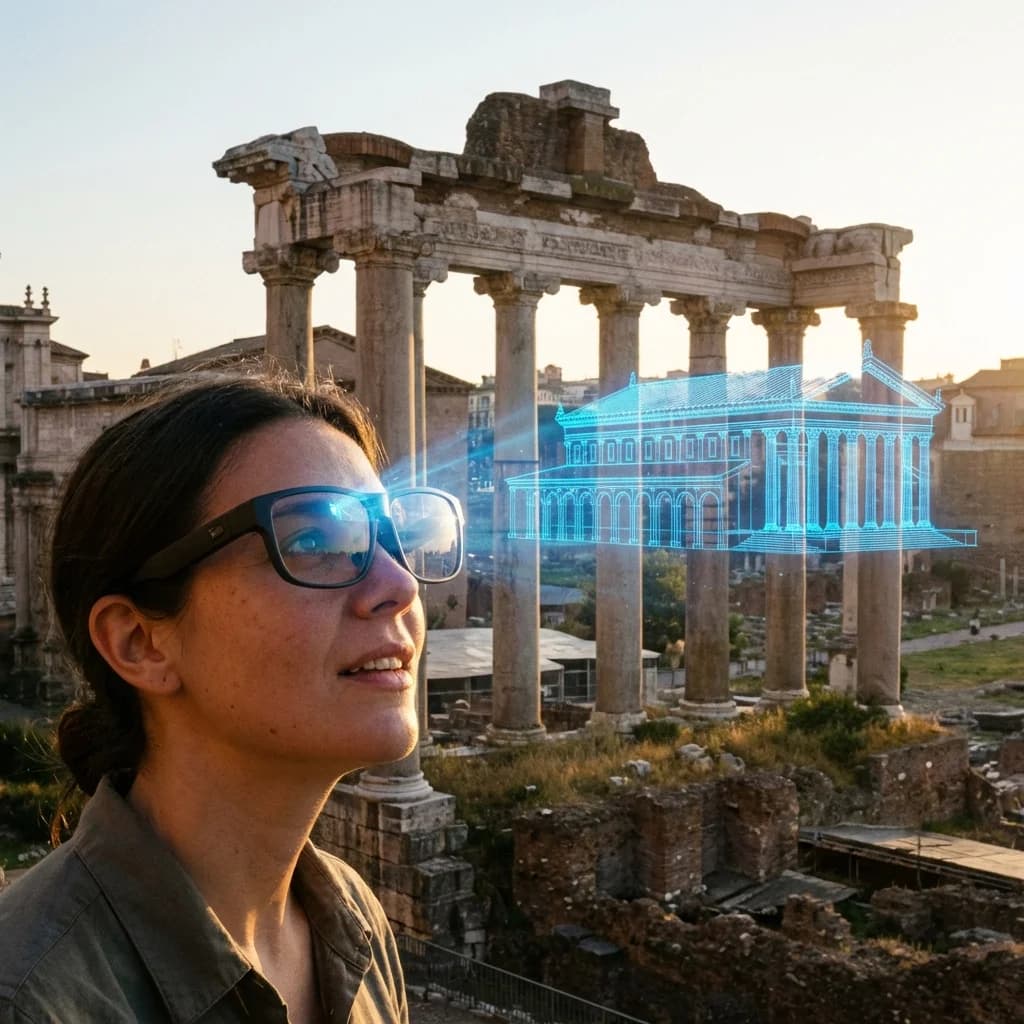
For the past decade, "Augmented Reality" in museums has usually meant one thing: blocking your view of a beautiful artifact with a clunky tablet screen.
While effective for information, this "screen-first" approach disconnects visitors from the physical space they came to see. But 2026 is marking a shift toward Hybrid History—technology that enhances reality without getting in the way.
The Problem with screens
When a visitor has to hold up a phone to "see" the history, their attention is split. They aren't looking at the Roman wall; they're looking at a video feed of the Roman wall. The psychological connection to the physical object is severed.
Enter Hands-Free AR
New lightweight AR glasses are changing the equation. Instead of a window you hold, they provide a layer you wear.
- Ghost Structures: Walking through a ruined abbey, wireframe arches appear where stone once stood, filling in the gaps in your vision.
- Contextual Labels: gaze at a statue, and the translation of its inscription floats beside it—no button presses required.
- Wayfinding: Subtle glowing paths on the floor guide you to the next room in your tour.
Projection Mapping: No Glasses Required
For indoor spaces, we're seeing a move away from personal devices entirely. Projection mapping can paint color back onto bleached statues or animate a tapestry without touching the fragile original.
This is the true promise of digital heritage: technology that makes itself invisible, leaving only the story.
Implementing This Today
You don't need a massive budget to start. Simple "WebAR" triggers on existing signage can allow visitors to unlock content without downloading an app. The key is to keep the interactions short, meaningful, and focused on enhancing—not replacing—the physical object in front of them.